
In a previous blog post, I discussed the major changes in technology which have revolutionised the way we learn Chinese over the past decade. From smartphone apps to the proliferation of online Mandarin video content, the way we study Mandarin now is barely recognisable compared to 15 years ago.
But looking forward to the next 15 years, we may see even bigger changes - particularly as AI continues to advance. So in this post, I look at five ways in which technology promises to revolutionise the way we learn Chinese in the future.
1. ChatGPT 4.0+
As we recently covered on this blog, ChatGPT 3.5 left much to be desired when it came to Mandarin learning. A study conducted by I’m Learning Mandarin contributor, Karl Baker, found that 10% of Chinese sentences generated by the AI chatbot were either plain wrong or unnatural in some way. This made it difficult to trust it as a source of natural, conversational Chinese.
ChatGPT 4 looks to be a big improvement in this respect, though it still has issues. A video recently posted on Open AI’s website shows the chatbot’s comical attempts to teach a learner to say 你好 (see video below). Still, if future updates continue improving at the same rate, reliable Mandarin-speaking chatbots and even tutors may not be far off. That would surely be a major game changer for Mandarin learners everywhere.
2. Sentence Mining Apps
On this blog, I talk a lot about sentence mining - collecting phrases and sentences and revising them using clever, spaced repetition algorithms to maximise your retention. Unfortunately, the best app currently available for doing this is in many respects…not very good. Anki is a free app that is not specialised for Mandarin - you can create flashcards on any topic you like. It has been around since 2006 and, used right, it is effective. But its clunky user interface leaves many learners frustrated.
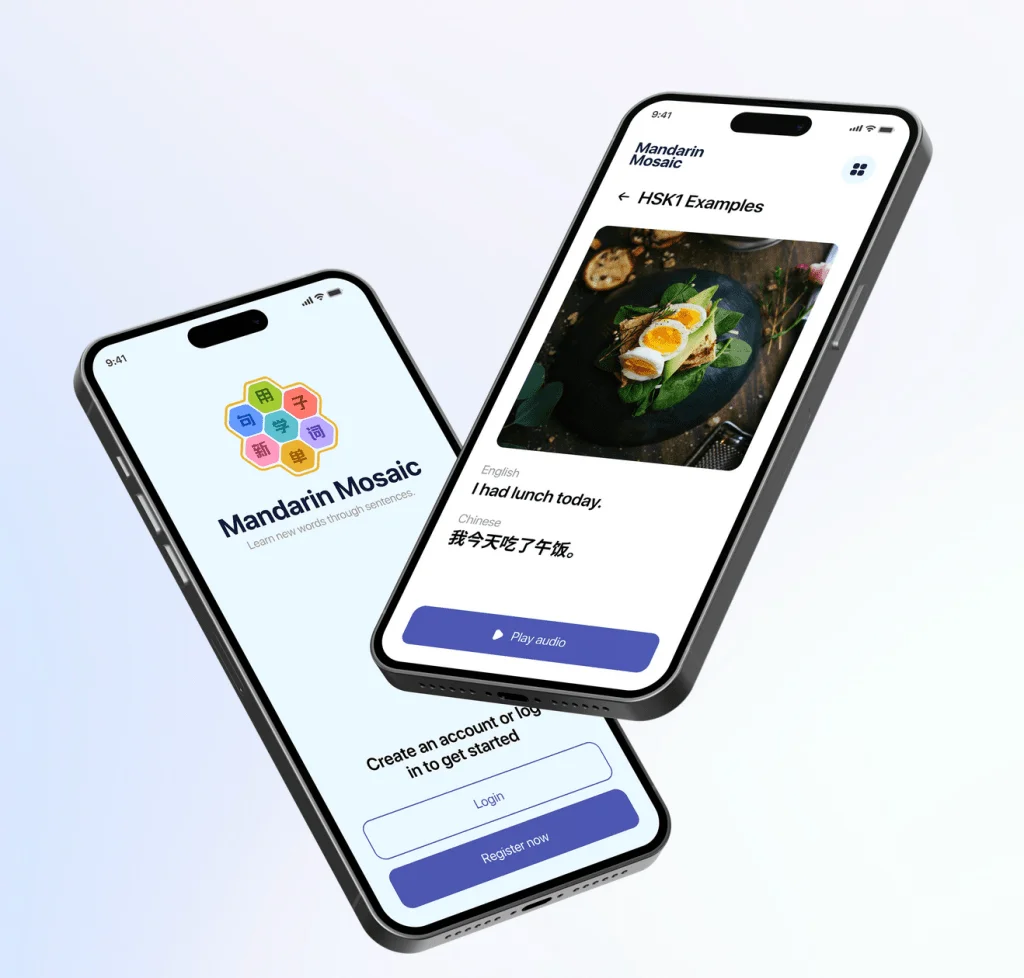
Amazingly, no user-friendly app has yet been developed that provides all of Anki’s best features for Mandarin learners. That might be about to change though, with the emergence of Mandarin Mosaic, a sentence-mining app for Chinese learners currently in Beta mode. Having used the app, I’m impressed with its simplicity and ease of use, despite a few issues that still need ironing out. Could this be the app that finally brings Mandarin sentence mining to the masses?
3. Text to Speech
Mining Mandarin sentences in audio form allows you to mimic them using the echo method and shadowing techniques. Traditionally, the best way to get recordings of natural-sounding sentences is to get your tutor or a native-speaker friend to read them out for you. Meanwhile, text-to-speech bots (TTS) have tended to sound robotic and unnatural.
However, the latest bots have begun to sound eerily human-like. One of the most impressive companies operating in this space is Eleven Labs, which uses AI to decide which syllables to stress for emotional effect. Try it out here or watch the clip below where I play a human Mandarin voice followed by AI reading out the same text. The hope is that this technology can be incorporated into sentence mining apps making it easy to collect, drill, and mimic native-sounding audio of natural Chinese sentences.
4. Voice Translation Technology
If you type, “celebrities speaking Chinese” in YouTube you’ll be hard-pressed to find more than three Western A-listers who can converse in the language. But in the future, it might be possible to take your favourite English-speaking celebrity, author, or TV show and listen to them in natural-sounding Mandarin.
Recently, a video went viral of Taylor Swift speaking fluent Mandarin. By analyzing hours of Swift’s recorded speech, AI was able to replicate her vocal patterns, tone, and inflections, generating Mandarin speech that sounded convincingly like Swift herself. Check it out in the clip below.
5. Gamification
It’s a source of utter bewilderment that an app as disappointing and mediocre as Duolingo remains the most successful attempt to turn language learning into a fun computer game. Surely, amid all the marvels of 21st-century technology, this is not the best mankind can do.
The hope is we will soon see the emergence of apps that incorporate gamification elements to make the language learning process genuinely fun and effective. One attempt to achieve this is Fluyo, the brainchild of the popular YouTube polyglot, Ikenna. Described as “the most fun and effective way to learn a language ever created”, the project raised over a million dollars on Kickstarter but there have been no recent updates on when it is likely to come out.
How about you?
How do you think technology will change Mandarin learning in the future? Are there any major advancements in the pipeline I missed? Let me know in the comments!