

Duncan Parrish is an I’m Learning Mandarin contributor and coordinator of Arti Languages, a project using mobile games and cognitive science to enhance how we immerse in Chinese. In this guest post, he introduces the concept of “The Fluency Simulator” and explains how repetitive listening activities develop our neural networks and second language comprehension skills.
My 2-year-old’s obsession with YouTube for Kids was getting me in trouble. Our temporary nanny had just asked me how much screen time she got. “Ha ha, hardly any” I lied.
My daughter stared quietly up at us both, perhaps wondering where I had hidden the tablet.
Suddenly, she brightened and addressed our visitor with a distinctive downward-pointing gesture: “Don’t-forget-to-like-and-subscribe!” she yelled, as though it was the only English she knew.
Of course, she knew far more phrases than that, much of them learned from videos she demanded to watch over and over again. How many times can a toddler handle hearing “Old McDonald’s Farm” or the Alphabet Song, I began to wonder, in anguish. The answer is: far more times than you can possibly comprehend.
Why was she never bored of them? Was such repetition even good for her? But it began to occur to me: perhaps she had something in common with people I was watching myself on the tablet.
Repetitive Listening
Successful Mandarin learners, such as I’m Learning Mandarin editor, Mischa Wilmers, and popular YouTuber Steve Kaufmann, often discuss their original personal study methods. And a feature that crops up again and again is their personal experience of the power of repetition: listening (or reading or watching) material many times, particularly in the early stages of learning a language.
Rather than merely listening to one Chinese podcast and immediately moving on to the next one (Extensive Listening), these learners would often listen to the same audio again and again and again (Intensive Listening).
Mischa collected audio files of his teacher reading out transcripts they’d written together during the lesson and listened to them on repeat while going about his daily life. Kaufmann, learning Chinese as a Canadian diplomat in the 1960s, listened to Xiàngsheng dialogues (fast Mandarin crosstalk comedy) again and again on reel-to-reel tape recorders.
In fact, most fluent Mandarin speakers I’ve come across incorporated some form of repeated listening activity into their study regime. Yet this kind of learning activity is rarely discussed in detail by linguists.
I argue that we should all make use of this powerful tool to develop our brain network’s ability to perform listening tasks in our target language.
Developing the Brain’s Networks
In humans, there are specific brain regions that handle language, and learning a new language through immersion will develop a new language network (interconnected with our existing language networks) that is fast enough to process human speech at speed. Without that new network, without immersion, your language learning efforts will fail.
So why is Intensive Listening the best form for beginners? Well instead of just taking the advice of successful polyglots, let’s return to the real star-player of language learning mentioned at the start of this post: the toddler.
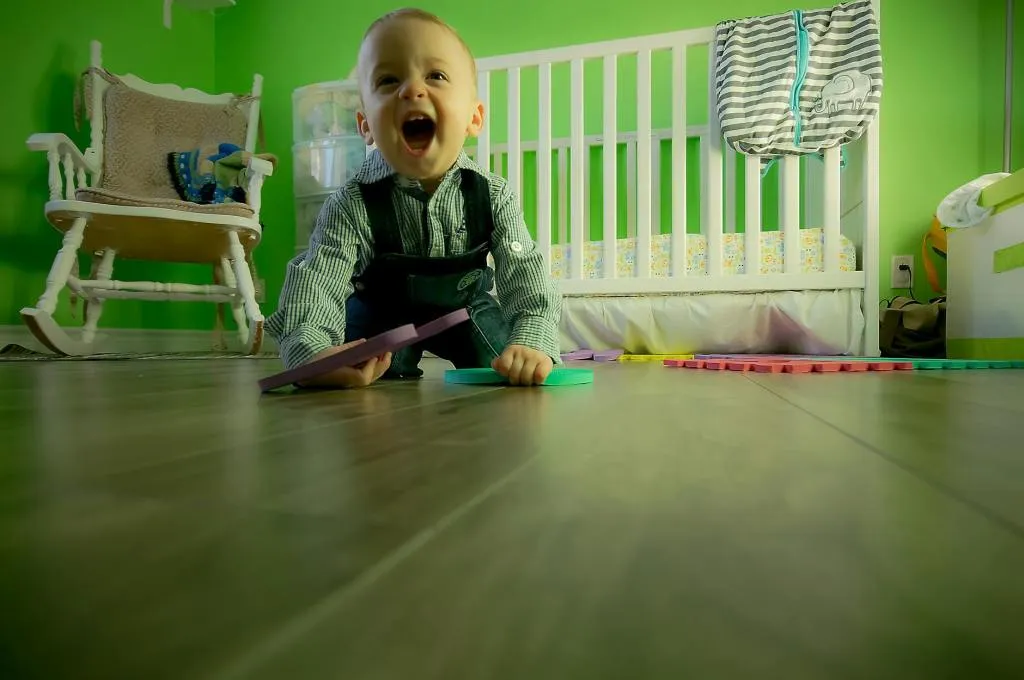
As adult language learners are painfully aware, children seem naturally drawn to positive language-learning behaviours, such as not worrying about mistakes or being happy only understanding half of what they hear. Could children’s enthusiasm for repeatedly hearing the same stories and songs be a similar situation?
In a recent study from the University of Sussex, two groups of 3-year-olds were read stories that included invented words (such as “coodle” and “gaz”). One group were read the same story 3 times over the course of a week (repetition), while the control group heard the same invented words in 3 different stories (a variety of contexts). The group that heard the same story repeatedly was “dramatically” better at later recalling these new words than the control group.
Why might that be? For early-stage learners, there are so many things to absorb during the first hearing of a story: from plot, to turns of phrase, to new words. The next time, they can pay attention to different aspects of the language with more confidence, and retain them more easily. Children may also enjoy the sense of anticipation in knowing what will happen next.
The sense of mastery they gain during each re-telling of the story gives them an idea of what it might be like to be an adult listening in, able to grasp and enjoy every detail immediately. It’s a “simulator” experience for what it’s like to be more proficient at language.
This “Fluency Simulator” can be enjoyed by adult language learners too. It’s what our brains need as we gradually learn to process a new language fluently: faking it til we make it.
Applying the Simulator as Adults
So how can we replicate the Fluency Simulator experience as adults?
Well, it turns out we boast an unfair advantage: reading. Most toddlers can’t read much, so their immersion opportunities are restricted to listening. But as adults, we can read - even if in Chinese that may involve relying on pinyin.
So we can start off with a halfway house between listening and reading - following along with a transcript, or simply watching videos with target language subtitles. This makes for a powerful “Fluency Simulator” as it allows you to experience what it might be like to hear large amounts of audio, and easily parse the sounds you are hearing into individual words.
At the same time, reading trains your language systems to rely on visual cues to parse words. One of the key language skills we need to develop is to parse words with audio alone. This, after all, is what’s needed to engage in a conversation with a native speaker, where no subtitles are provided. So before long, we should also practice listening without the aid of reading.
Take a Ride in the Simulator
So what does the Fluency Simulator look like in practice?

We start off listening to a new piece of audio, perhaps a few minutes long, that we know is at about our vocab level. After repeated listening, we grow to understand it intimately. Even though our overall abilities in the language beyond that audio may still be severely limited, we have experienced what it’s like to understand at a high level and in the process developed our brain’s capacity to parse words at natural speed.
When you first listen, as a near-beginner, a lot of the time you can’t understand the audio in part or at all, even though you might recognise the words. This experience dismays a lot of people, who think they are simply bad at language learning. By contrast, experienced learners know that this just means their language network hasn’t developed yet.
Being humbled in this way means you are on the right track. You are personally, painfully, learning how far you have to go, but your language network is also taking note, and preparing to grow.
As you listen a couple more times without the text, certain words or phrases come into view. You start to think that maybe you understand more than you thought. Next, you start listening while reading the transcript. Suddenly many more things become clear. Finally, you read through the text to check you understand everything.
Now you can continue listening to the audio over and over again, but this time in full “Fluency Simulator” mode, each time as though you were fluent and hearing it all for the first time.
The more re-listening you do, the more the landscape grows clearer, surprising you with each new revelation. You also develop a stronger interest and focus on the text as you uncover more features.
Remember successful Mandarin learners may listen to the same audio dozens of times! In particular with Chinese, repetition helps you start to notice tones a lot more, whether consciously (“that was a really clear 3,2 tone pair”) or not.
At a higher level, you will also be interested in speaking, and Intensive Listening lends itself well to Sentence Mining and even “Shadowing” (carefully mimicking the audio), as you simulate what it’s like to deliver each line exactly like a fluent native speaker.
Again! Again!
Your Immersion mix should change over time, with more Intensive Listening at the early stages, and more Extensive Listening as you gain more experience - just as happens when children mature into more extensive listeners and readers in their native language.
Remember, this Intensive period can last a long time in Chinese because there are so many challenges to overcome in listening. But don’t be disheartened. Show some toddler spirit and lose the self-doubt.
To quote the immortal wisdom of the Teletubbies: “Again! Again!”
*Arti Languages are developing a new way to immerse in Chinese called Artificial Immersion - a completely new kind of Listening that aims to build your language network as fast and strongly as possible. You can watch Duncan demonstrate how it works below, and download their initial experimental game for iOS or Android on the website here.