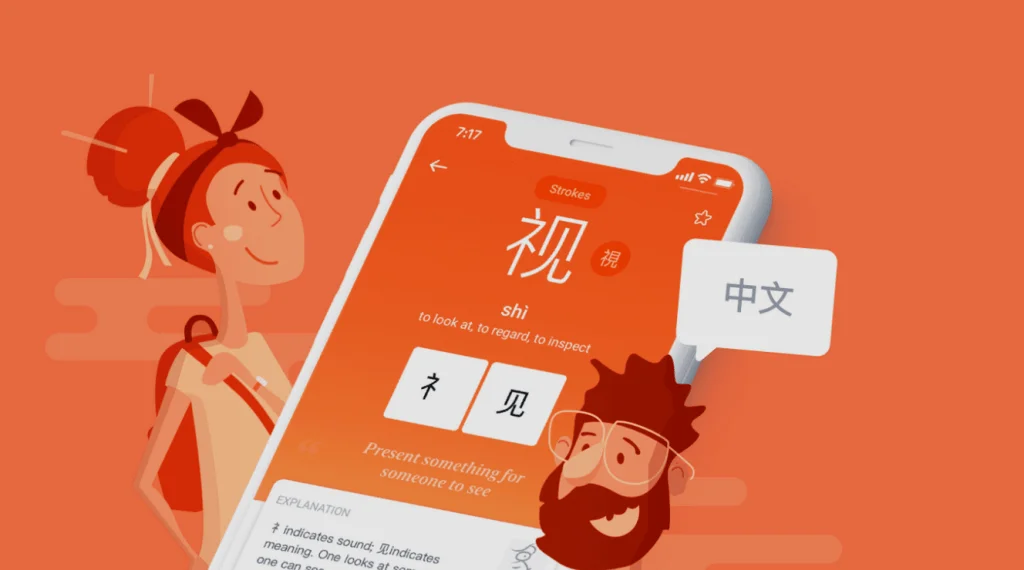

If you’ve memorised the most common 500 to 1000 Mandarin words you might find yourself in an awkward position. You can understand most of what’s written in your textbook but when you browse the web in Chinese or read novels you feel lost. The sheer volume of unknown words and characters makes understanding anything impossible and you don’t know where to turn.
This was a problem I faced early on in my learning. But when I asked around for a solution I found there was a lack of advice on how to plug the gap between the textbook or Duolingo and the real world. So in this blog, I’ve listed four ways you can work your way up to reading Chinese books, articles, and other content written for native speakers.
1. Graded Readers
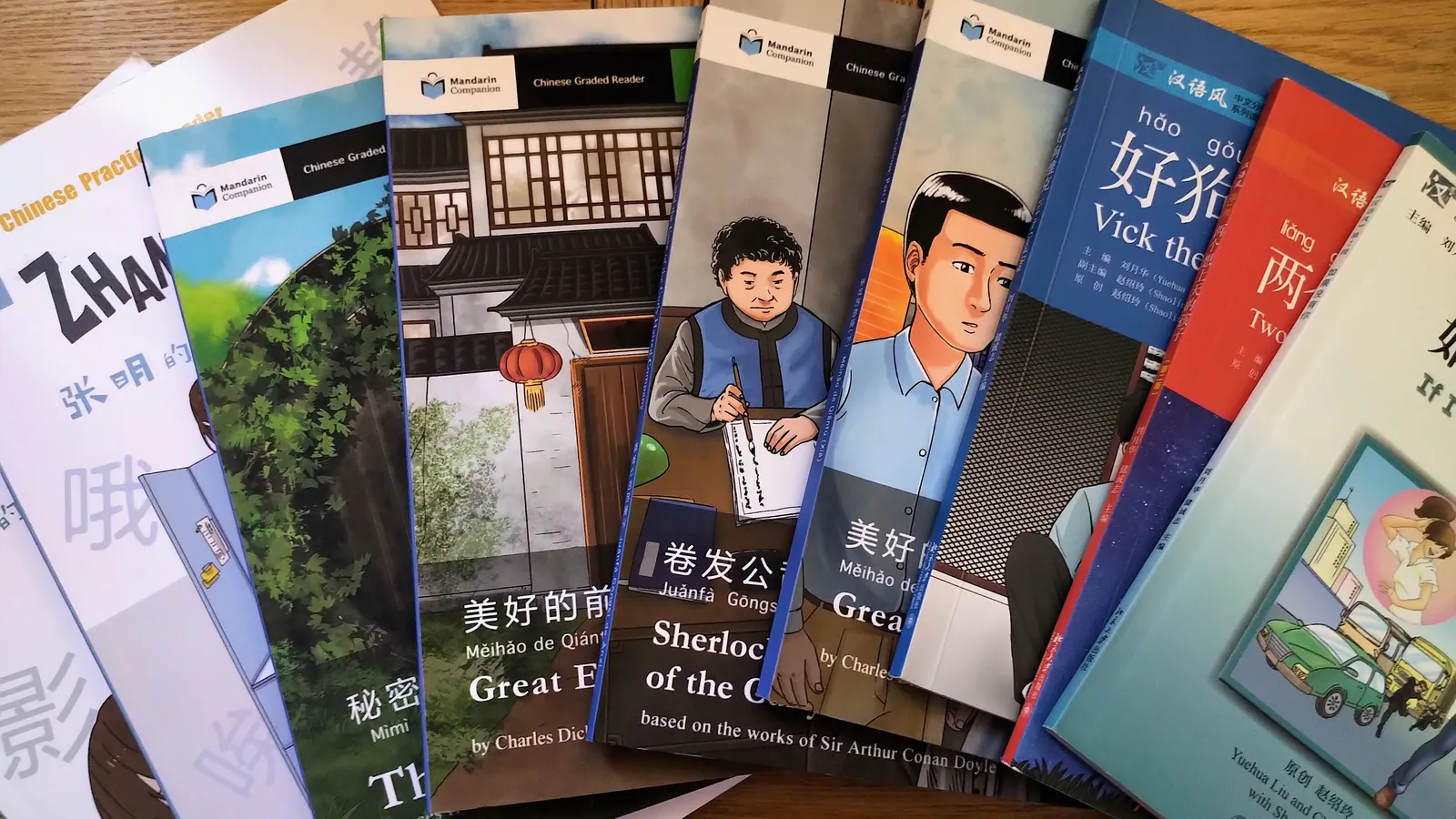
Graded readers are a lifesaver for elementary and intermediate learners who want to improve their reading skills. Graded at different levels of ability, they provide stories and short novels written in simple Chinese, enabling learners who only know a few hundred characters to begin reading extensively. Rarer words are listed at the bottom of the page with the English translation making them easy to look up.
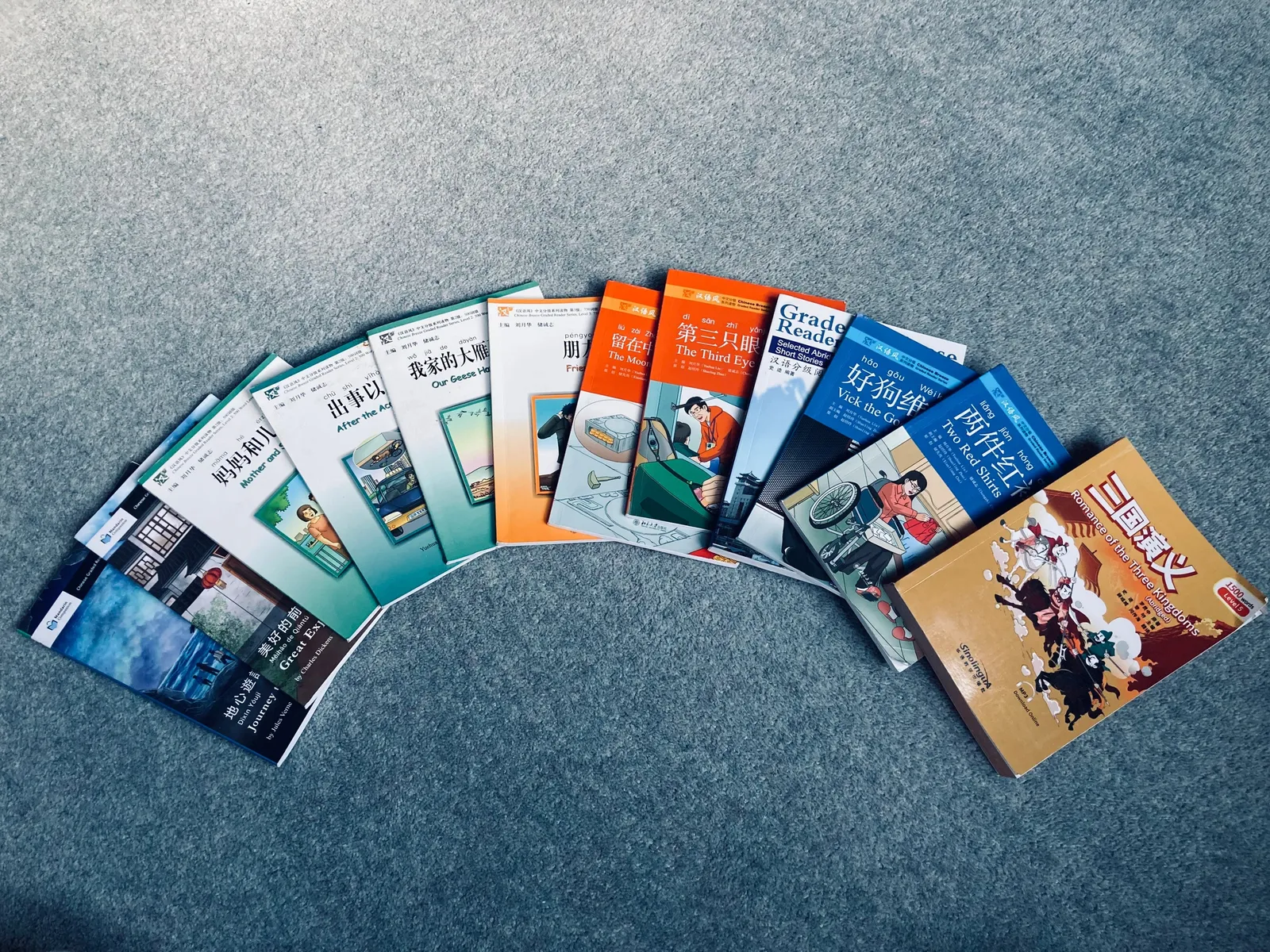
As I wrote in this post, I used two series of graded readers when I first started: Beijing University Press and Mandarin Companion. Reading these series helped me increase my reading speed and vocabulary size from around 300 characters to well over 1000, at which point I could begin tackling simpler native content.
2. Online Readers
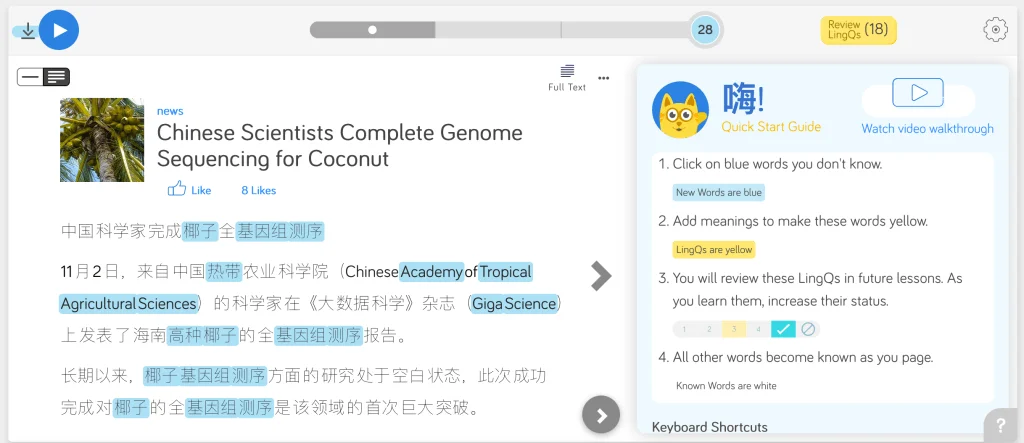
Several websites provide a bank of interesting content for elementary and intermediate Chinese learners to read, such as articles and books. Like graded readers, content is usually graded at different levels but online readers have the added advantage of making it easy for you to look up words you don’t know by clicking on them.
One of my favourite websites is LingQ, as it contains lots of interesting content and allows you to import content from other websites. Using LingQ enabled me to begin tackling semi-native content for the first time: a podcast series that included audio and transcripts of two friends discussing their daily lives in Beijing. The podcast was intended for intermediate learners but the speakers chatted using colloquial Chinese at a natural pace.
3. Plugin Dictionary
Plugin dictionaries enable you to look up Chinese words you don’t know by hovering over them when browsing the web or watching videos online, making it easier to start tackling native content when you’re at a lower level.

The two best plugins I’ve used are Language Reactor - which you can use to look up unknown words in the subtitles when watching Netflix - and Zhongwen Chinese Popup Dictionary, which enables you to hover over words to look up their meaning when reading content on the web. The latter is only available on Firefox.
4. Colloquial Content
When you feel ready to give native content a go, it’s important to choose carefully. Not all native content is at the same level of difficulty. If you know between 1000 and 2000 characters you may find formal news articles and novels beyond your reach. However, transcripts of native conversations will likely be more manageable.
A good source of more colloquial language is the online orum zhihu.com - the Chinese version of Quora. If you do a Google search in Chinese for questions or topics you’re interested in you’ll usually find lots of forum posts written by native Chinese speakers offering their views and advice.

Ditching the textbooks and delving into native content is something every learner has to do at some point if they want to achieve fluency. But thanks to the four tools listed above, this doesn’t have to be as daunting a jump as you might think.
How about you? What tools have you found effective to bridge the gap between learner material and native content?
Let me know in the comments!