Recently the Times reported the number of British pupils studying foreign languages has more than halved over the last 20 years.
Only 131,000 pupils took French GCSE this summer, down from 331,000 in 2003. A similar slump was observed for other modern foreign languages (MFL).
This downward trend has also negatively impacted the number of students enrolling on university Chinese Studies courses. Nick Hillman, Director of the Higher Education Policy Institute, told the Times:
“It is scandalous that we have no more Chinese studies students than we did back in the days when China was not a global player.”
Nick Hillman, director of the Higher Education Policy Institute
Hillman assumes that studying Chinese at school and university is the best (or perhaps the only) path to proficiency. But as someone who self-studied Chinese to an advanced level while living and working full time in the UK, I know that this is far from the case.
What’s more, one of the long unaddressed scandals of MFL education is that pupils who study languages for years at school and university often fail to become functional in them.
We all know this to be true anecdotally: how many readers who took a French GCSE or A-level at school were anywhere close to fluent after passing these exams?
And while I’m fortunately now able to use Chinese daily, I’ve lost count of the number of language graduates I’ve met who can barely string a sentence together, even after four or more years of study and a year abroad.
The number of British pupils studying foreign languages at school has been falling steadily since 2004 when Tony Blair scrapped the requirement for all pupils to take a language up to GCSE. And many educators suggest the solution lies in a return to the days of compulsory foreign language education.
But given my own experience, and having documented the stories of some of the world’s most accomplished language learners on my blog and podcast, I question the wisdom of turning to the classroom for answers.
With few exceptions, the best learners I encountered were autodidacts who structured their learning around their interests and used the language to form meaningful relationships with native speakers. Perhaps surprisingly, the role that classrooms played in their studies ranged from non-existent to peripheral. Most felt preparing for exams was an utter waste of time.
A common theme running through the stories of younger learners was that they hated studying languages at school. Frustrated at their lack of progress they ditched the textbooks and turned to the internet, seeking out learning content that matched their interests and turning to polyglot YouTubers for advice on study techniques.
In the past, if you wanted to get your hands on good French learning content you had to hope your school had a good language lab. If you wanted to practice the language with an actual French person you had to sign up to a pen-pal scheme and wait months for a reply to your letter.
Now, anyone with an internet connection can access an unlimited array of content in practically any language and chat with native speakers for free on language exchange apps. More and more learners are creating their own immersive language labs from the comfort of their bedrooms.
Take the case of Will Hart, which I’ve documented on this blog. A young medical student who took up Chinese as a hobby during lockdown, Will’s only previous experience of language learning was taking Spanish at school for several years. Like many pupils, the experience left him feeling sick of preparing for tests and totally unable to communicate beyond a few common phrases.
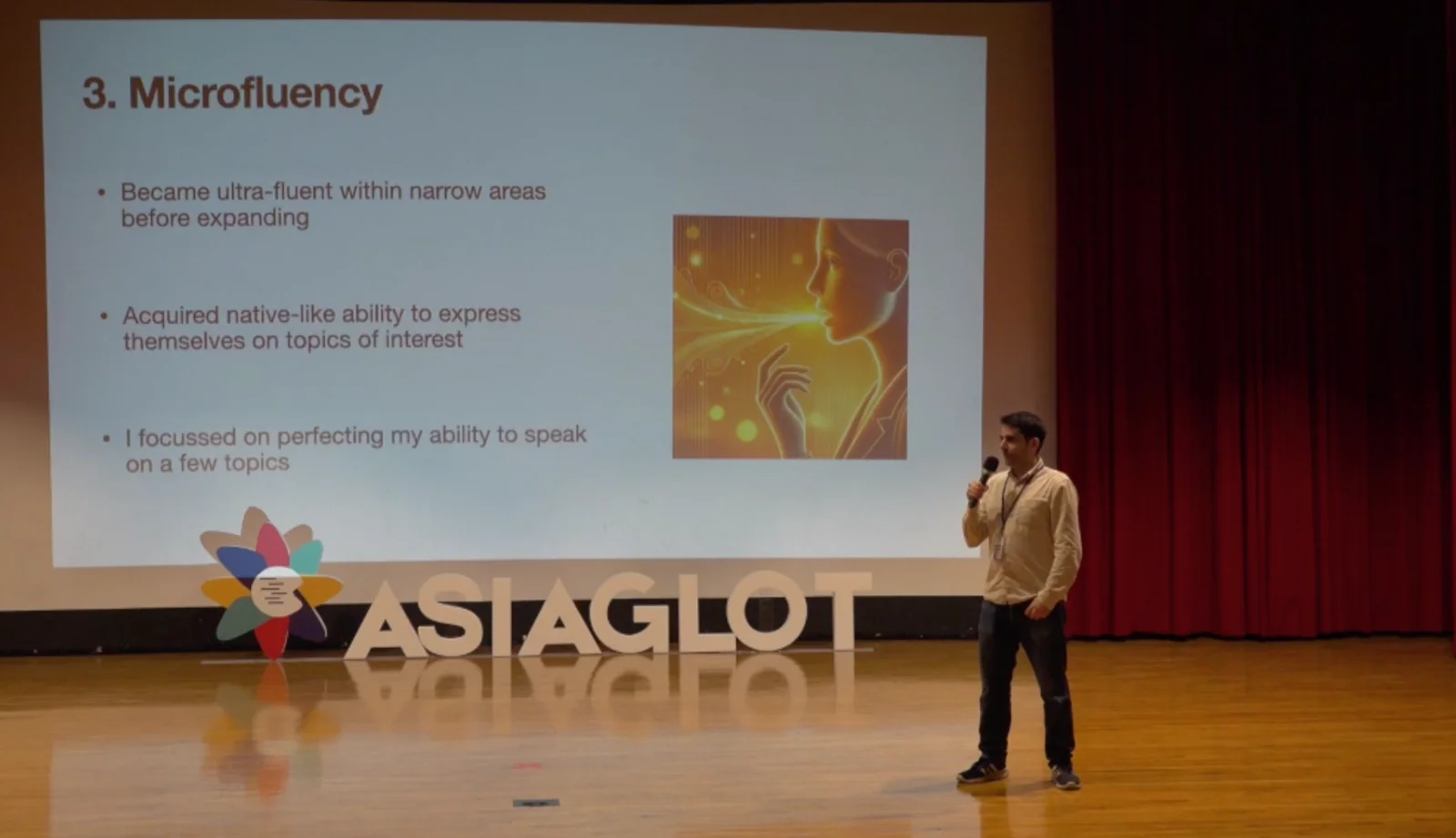
Yet armed with sophisticated learning techniques, Netflix and a few Chinese friends, Will managed to teach himself to speak Mandarin to an incredible level of fluency within a little over a year. In 2022 he won the Confucius Institute’s annual Chinese Bridge speaking competition, wiping the floor with competitors who’d been studying on traditional university courses for five times as long.
He may sound like an outlier. Yet Will represents the changing face of language learning in the Western world. Through my work coaching Chinese learners I’ve met dozens of self-directed learners who’ve opted for an independent path - often achieving impressive results.
Classroom numbers may be dwindling but surveys suggest online interest in foreign languages is booming. During lockdown, an estimated six million British people took up a new language. Tapping into this trend, influencers can now rack up tens of millions of YouTube views filming themselves speaking different languages and sharing study tips.
Without major reform, schools and universities are in danger of becoming increasingly redundant in the language learning sphere. They now operate in a digital world which is leaving them lagging behind. Curricula continue to be rigidly tied to arbitrary testing, forcing pupils to study things they find boring and distracting them from pursuing their personal interests or using the language to communicate effectively.
Industry leaders warn that Britain faces a critical shortage of bilingual workers, particularly Mandarin speakers. Yet the future role of schools and universities in reversing this trend remains unclear.
Perhaps the answer lies instead in encouraging more young people to join the self-learning revolution and realise that with a little ingenuity, it’s now possible to become proficient in a foreign language without setting foot in a classroom.