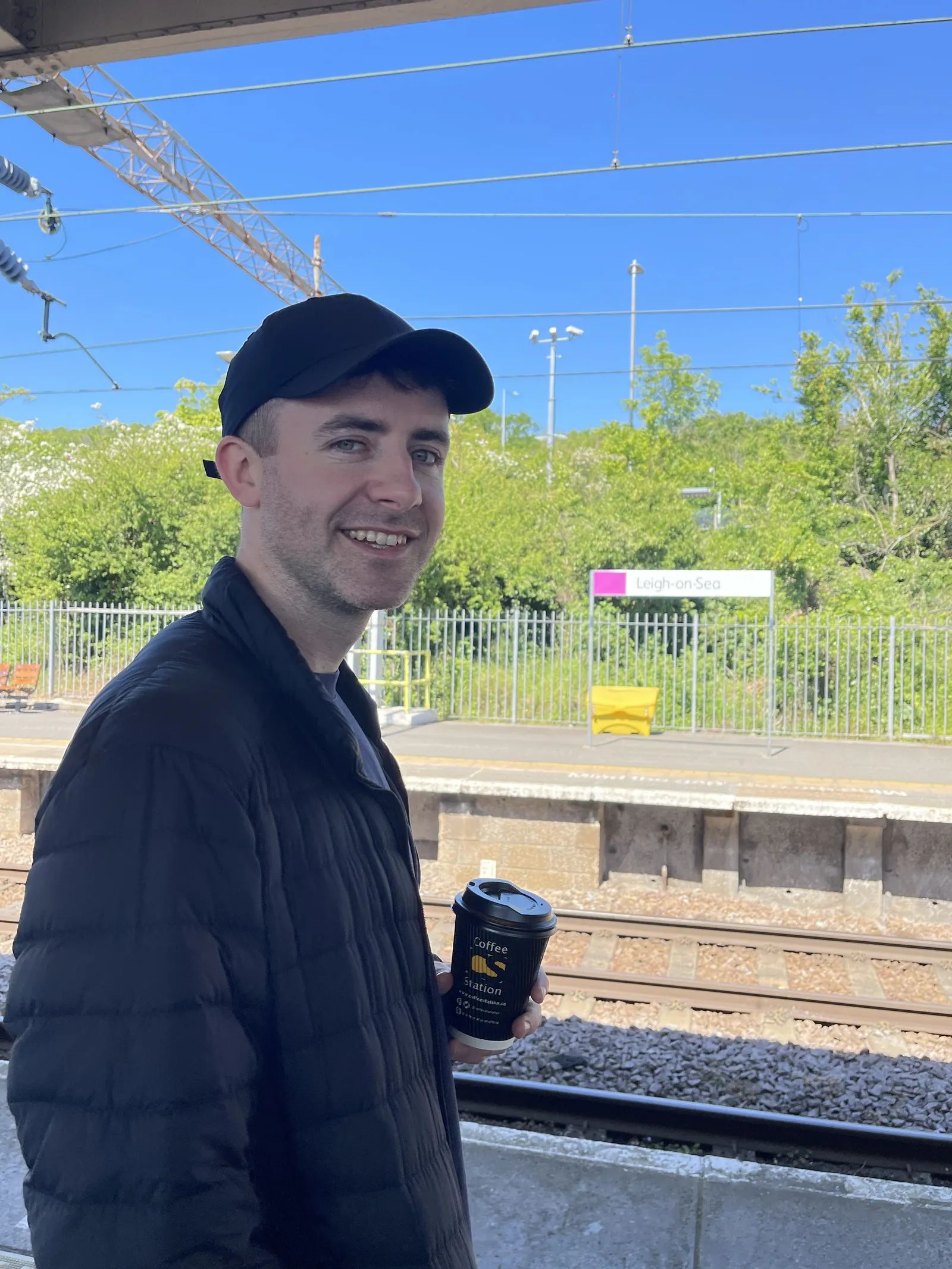

Chris Foley has set himself a challenge to improve his tone pronunciation, and achieve a standard Mandarin accent in time for his Chinese wedding ceremony in one year. To reach his goals, he’s enlisted I’m Learning Mandarin founder, Mischa, as his language coach. Over the coming year, Chris will be documenting his progress over a series of monthly blogs with recordings. In this first post he tells his back story and sets out his goals.

*Check out Chris’s experience at the I’m Learning Mandarin Gym in month 1, month 2 and month 3.
After the excitement of the first few months - setting out on this ambitious challenge, traveling to China, immersing myself in a new environment - these past two months have been all about something less glamorous but arguably even more important: routine.
Settling Into the Grind
I’ve recently relocated to London, started a new job, and moved into a new flat, all at once.
Between getting used to my new role, adjusting to a new country, and unpacking endless boxes, life has been hectic. These sorts of transitions inevitably put pressure on your time and energy, and language learning is often the first thing to fall by the wayside.
But I’ve learned that the real key to long-term progress is not perfection, but consistency. That doesn’t mean hitting your goals every single day. Life happens, and some days you’ll simply run out of steam or get pulled in another direction.
What matters most is that you don’t let those off-days turn into off-weeks. You just keep going. That mindset has helped me stay on track through the chaos.

Staying Accountable
A major part of maintaining that consistency has been my continued communication with Mischa, my language coach.
Even on the busiest weeks, I’ve stayed in touch, sending him voice recordings for feedback and completing regular homework tasks.
His feedback has been especially focused on tone accuracy, which remains the central goal of this project.
Mischa holds me accountable, but he also provides encouragement and direction. Knowing someone’s listening carefully to my pronunciation (and sending back corrections!) adds a level of pressure that’s both challenging and motivating.
It’s pushed me to keep improving, even when life gets in the way.
Visible Progress
It’s been hugely motivating to see the progress I’ve made. At our most recent monthly check-in, Mischa tested me on a selection of HSK4 vocabulary.
The result? I got the tones correct on every word.
That might not sound like a big deal at first glance, but it represents a major breakthrough for me.
When we first started working together, even very basic vocabulary that I’d “known” for years were riddled with tone errors.
Fixing these ingrained mistakes has required patience, repetition, and a willingness to slow down and focus on accuracy above all else.
Of course, the next challenge is transferring that accuracy into natural speech. When I say words in isolation, I can often get the tones right. But in the flow of conversation, those old fossilised habits creep back in.
My mouth moves faster than my brain, and I sometimes revert to the tone patterns I’ve been using incorrectly for years. It’s a slow process, but I’m committed to getting there.

A Big Test Ahead
The coming month is going to be a real test of how far I’ve come. To mark the halfway point of this project, I’ll be appearing as a guest on Mischa’s podcast:
My first ever interview entirely in Chinese.
It’s a chance for me to showcase what I’ve achieved so far.
This will be a big challenge, for sure. But it also feels like the right time to push myself.
I’ve built a solid foundation, and I want to see how I perform under pressure. Recording that conversation—knowing it will be shared publicly—adds a new layer of motivation.
Reflections at the Half-Way Point
Before I started working with Mischa five months ago, I already considered myself a decent Chinese speaker, capable of getting by day-to-day in China and conversing with family and friends.
But in reality, I also knew that I had glaring issues with my pronunciation—especially tones - which are absolutely essential to being understood in Mandarin.
These were regularly causing misunderstandings when I tried to communicate, especially whenever I progressed beyond basic topics of conversation.
Now, thanks to the focused work we’ve done together, I can honestly say I’ve made measurable progress. Mischa helped me identify my weaknesses and gave me the tools to improve them. It’s been humbling, but incredibly rewarding.
The next month will be intense, but I’m excited for the challenge. No matter how the podcast interview goes, I’ll come away from it with a clearer picture of my strengths and where I still need to improve. And that, ultimately, is what this journey is all about.
Stay tuned for next month, when I’ll share the interview and discuss what I learned from putting my Mandarin skills to the test in front of a real audience.